The hills, streams, and homes of Vicksburg and Warren County are filled with treasure! Not the type you find diving on old Spanish galleons, or dug from a sandy island beach where Blackbeard buried his hoards. No, Vicksburg’s treasures are within the walls of its residences, or lie on a table at a local thrift shop, rest in the hands of an auctioneer, were lost by a schoolboy or buried years before by an old gentleman who didn’t trust banks, or were lost, discarded or fired by the soldiers of several different wars who fought or camped all around our city and our county. For nearly forty years I’ve searched Vicksburg and Warren County for the treasures that abound here in such diversity. It’s been a fascinating hobby that has brought me a great deal of enjoyment, so much so that I feel I should share my experiences with my friends and neighbors – you.
Many of my treasure-hunting years were spent searching the hills around Vicksburg (and other parts of Mississippi) for coins and relics of the War Between the States; my primary experience, therefore, is with a metal detector. But yard sales, flea markets, auctions and estate sales, pawnshops, and plain, ordinary people have all been great sources of treasure. In my quests for Vicksburg’s treasure I’ve dived in our rivers, dug a million holes in our hills (I covered each one), seined our innumerable streams, traded with hundreds of local residents, and bought from hundreds of others by placing wanted ads in our newspapers. I’ve bought from eBay or from local auctions, and walked miles and miles to eyeball the treasures found in the freshly plowed fields all over our county.
I have discovered that the hobby is so enjoyable that treasure hunting can gradually rule your life. “It’s a Disease!” That’s the title of a short piece I wrote for North South Trader’s Civil War magazine many years ago, back when I was Plant Manager at the Baxter Wilson power plant. The story is true, though I’ve fiddled a bit with names and places to avoid revealing certain details. I think it’s fit to share it with you:
It’s A Disease!
“Plant Manager! Line 1!” I heard myself being paged on the plant PA system. The Shift Supervisor sounded excited. I picked up the nearest handset, the one on Sarah’s desk, and answered.
“Dispatcher just called! Said they lost another unit in Arkansas!” the voice screeched. “Said for us not to touch a thing! If we lose our units, half the people in Mississippi will be without electricity. And a bunch in Louisiana and Arkansas!”
“Low water?” I asked. “Did low water cause them to lose the unit?”
“Yeah, they lost cooling water. Gage is under a foot now. This is the lowest the Mississippi has been in years.”
“Well, keep everybody alert. Call me if there’s any problem,” I said. “Day or night. Keep those units humming.”
Quite satisfying, I thought, though rather nerve wracking at the moment, to know we were so badly needed. These Vicksburg units were the largest in the entire state; they supplied electricity for many of the people who lived in Mississippi, and for a huge number of folks in other states as well.
“There’s one thing,” the Shift Supervisor continued, “We had two Operators call in sick. We can’t find the off men, so we’re short handed. We’re okay for now, though, just hope nobody else calls in sick.”
“What?” I replied. “Don’t they know how critical things are right now?”
“Yeah…”
“Keep trying to find them.”
Sarah the Secretary had come in by now, and was answering telephones and making coffee and rushing around as usual. “Chief,” she called from the break room as I headed toward my office, “Tommy called in, wanted a day’s vacation. I told him you wouldn’t mind.”
“What?” I growled, turning, “Things are critical. Half the people in Mississippi…”
“He wanted off sooo… bad, I just couldn’t tell him you wouldn’t let him…”
“Aw, all right,” I answered.
I settled down for a well-deserved cup of coffee. I had only been in my office a few seconds when the Mechanical Supervisor burst in. “Chief, I need to be off for a while. You don’t mind, do you?” he asked breathlessly.
“Joe, you know the situation,” I said patiently. “Half the people in Mississippi…”
“It’s an emergency, Chief!”
“Well,” I relented, “if it’s an emergency… Just stay in touch.”
“By the way, Chief, do you have any double A batteries? Save me a stop if you do.”
“Sure,” I answered. “In the car. I always keep an extra set in the glove box for my metal detector. But what…”
“Thanks, Chief.”
And he was gone. Strange behavior, I thought, for such a reliable supervisor.
AA batteries? Suspicion began about then.
I took care of several phone calls, including one to my boss in Jackson to assure him that the station was in tip-top shape and could be relied upon to keep the juice flowing to all those homes and businesses throughout the mid-south area. Like all good bosses, he complimented the performance of my crew and its leader, and assured me that heads would roll if anything went wrong. What a guy!
“Sarah,” I said into the intercom after a while, “tell Ralph I need to see him. We need to discuss what we’ll do if the river drops much lower.”
“He’s not here, Chief,” she answered.
“What? What the devil is going on around here? Where is the Lead Mechanical Engineer?”
“He said if you were looking for him to tell you he had to go check on the river, north of town.”
“On the river? What’s he doing on the river north of town?”
“I’m not supposed to tell you that.”
“What?” I screamed.
“Maybe I will… He’s up there picking up cannon balls.”
“Cannon balls…,” I said softly. My mind worked furiously. “Do you know where, exactly, Sarah?”
“I’m not supposed to tell you, unless it’s an emergency.”
“Well, it’s gonna be an emergency, real shortly!”
“Okay, okay. It’s a place called Haines Bluff. Do you know where it is?”
Haines Bluff. Everybody knew where Haines Bluff was. That was a Confederate fortification and camp north of town. Our Southern boys abandoned it after the Battle of Champion Hill. They moved into Vicksburg. They and the invading Yankees dumped the fort’s munitions into the river. They dumped the…
“Sarah!” I screamed as I rushed from my office and headed to the front door. “If anybody calls, tell them I went to check on a leaking valve in the tank farm.”
“But Chief,” she said, “You can’t leave. Half the people in Mississippi…”
“It wouldn’t hurt them to do without power for a little while,” I yelled as the door slammed behind me.
The nerve of those guys! I thought as I steered my car north. I trained half of them on how to use a metal detector. Heck, I got most of them started in the treasure-hunting business! Now this! I just hope there are enough of the crew left at the plant to keep it running…
The woods were full of cars, all of them familiar. I parked among them and jumped out. That was when I remembered I had on my new Florsheim shoes and my best pin-stripe suit. Oh, well… the stores were full of clothes. I tore off my tie and coat and jerked my detector from the trunk, then followed the path that led down to the water, the river, to the wealth of relics that must lie there now, exposed, waiting…
They were ending things up. Groups of them. Operators. Engineers. Mechanics. Warehouse personnel. Joe and my AA batteries. They had piles of cannon balls and artillery projectiles and all sorts of rusty and interesting objects that were valuable. There were holes everywhere in the now-bared river banks, holes with shapes like round balls, and Read shells, and Schenkl shells, and Brookes, and even Confederate buckles. My crew was winding up the hill, half the plant employees, I thought, like a busy trail of ants, laden with object d’art, back toward their cars. They didn’t speak. They had more important things on their minds.
I rushed to the water’s edge, thinking that perhaps it had dropped a little more in the last few minutes, that I might at least pick up a Minie ball. My detector hummed that soft little buzz as I searched, the buzz that tells you there’s nothing there. I got a signal. Square nail.
They were gone now, and I was left alone, standing in my muddy Florsheims, detector drooping to the ground. I wondered what the river level would do tomorrow. I wondered about half the people in Mississippi, and the huge number in Louisiana and Arkansas.
I trudged sadly into my office after the drive back, leaving muddy footprints along the way. The power was still on. Some of the employees had returned to work. I marveled at the force that had taken hold of them, a force that had compelled half the people at the plant to drive north.
It’s a disease! I thought then. A fatal disease for which there’s no cure. And most of the people in Vicksburg have it.
“Hi, Chief.” It was Ralph, my trusty Lead Mechanical Engineer, at my door. “Get anything?”
“No, Ralph,” I answered, “But you’re fired.”
“But Chief! I couldn’t help myself!”
“I know, Ralph. It’s a disease. You can stay.”
“I got a six-point-four Brooke shell. Strange fuse. Confederate. Must be rare.”
“I’m gonna kill you, Ralph.”
“No, Chief. Remember. It’s a disease.” He left hurriedly.
I settled back into my chair and pondered vengeance. But had I any reason to feel vengeful? It struck me that we all, from Operator to Engineer to Plant Manager, had considered the opportunity to dig a few cannon balls reason enough to neglect our duties and perhaps place all those people in Mississippi and Louisiana in jeopardy…
It’s a disease! I realized once more with a shudder. A disease!
Need more proof? Well…
Several years ago, after researching much of Vicksburg’s War history, I became convinced that the Yankees had camped on a certain hillside within the city. I found that two large churches had been built atop the suspect plateau, but that there was plenty of open ground down the hillsides around them. I proceeded to call the pastor of one of the churches; he subsequently gave me permission to hunt the grounds – as long as I didn’t leave any holes.
The next opportune day I loaded shovel and detector, drove to the church, and began hunting. Within a few minutes I located bullets and buttons – enough to confirm the presence of the invaders.
I was having a great time when a gentleman approached me and asked what I was doing. I told him, and added that I had gotten permission to do so. No, he told me, I hadn’t, because he was the pastor of the church, and he had done no such thing. It dawned on me then – I was hunting the grounds of the wrong church!
The pastor wasn’t too upset when I explained. After telling him who I was and the reason for my presence, I was allowed to go on with the hunt. The pastor hung around and watched as I pulled relics from the ground, often expressing his wonder and excitement. I explained to him what each item was, and how it was used. When it was too dark to hunt, I thanked him and left.
That night I got a call from the pastor. He had decided, he said, that I should not come back on the church grounds, that all that digging might cause the hillside to wash, the congregation didn’t want me there, etc., etc. No amount of begging on my part could persuade him to change his mind.
But I still had permission to hunt the other church grounds, and a couple of days later I did so. And guess what I found when I returned? Yep. That pastor had his metal detector out scanning his own church grounds, digging relics. I got out and hunted the opposing church grounds right up to his church’s property line, all the while exchanging indecent glances with the renegade pastor.
That night I got another call from the pastor. He was quite upset. I’d gotten too close to his digging grounds with my detector and shovel. So he told me, in no uncertain terms, and in language no pastor I’ve ever known would use, the exact location of each and every property line. I was nice to him, though I had to grit my teeth, and I promised him I would never ever trespass upon his claim. In hindsight, I wish I had used some language just as strong as what he used with me.
You think it’s not a disease? Oh, but yes. Even the Holy are not immune.
I have a friend who is so badly afflicted with the addiction that he once used a bulldozer to unearth the treasures lying in a local river at the scene of one of the battles of the War. Of course, the EPA and the Corps of Engineers were quite upset with him, and he wisely abandoned the project.
A great aspect of the treasure-hunting hobby is this: Treasure hunting is for everyone. Young men and women, old men and women, kids, even those who are handicapped if they can read a newspaper and operate a telephone, or have access to a computer. Let me give you a striking example:
I recently met an elderly gentleman who had brought along some bottles for me to take a look at, with the thought that I might purchase them. In the course of our conversation I learned that he had a metal detector, and that he had found lots of War relics. I was taken aback, for the gentleman was obviously advanced in age. I asked him his age, and he replied that he was 89. Naturally, I wanted to know how long he’d been relic hunting, but when he told me “about 15 years,” I realized that he’d begun the hobby at the age of 74! In the ensuing year he and I shared spots and hunted together; I developed a great respect for him. He’s well over 90 now, and still digging. And he has a fine collection.
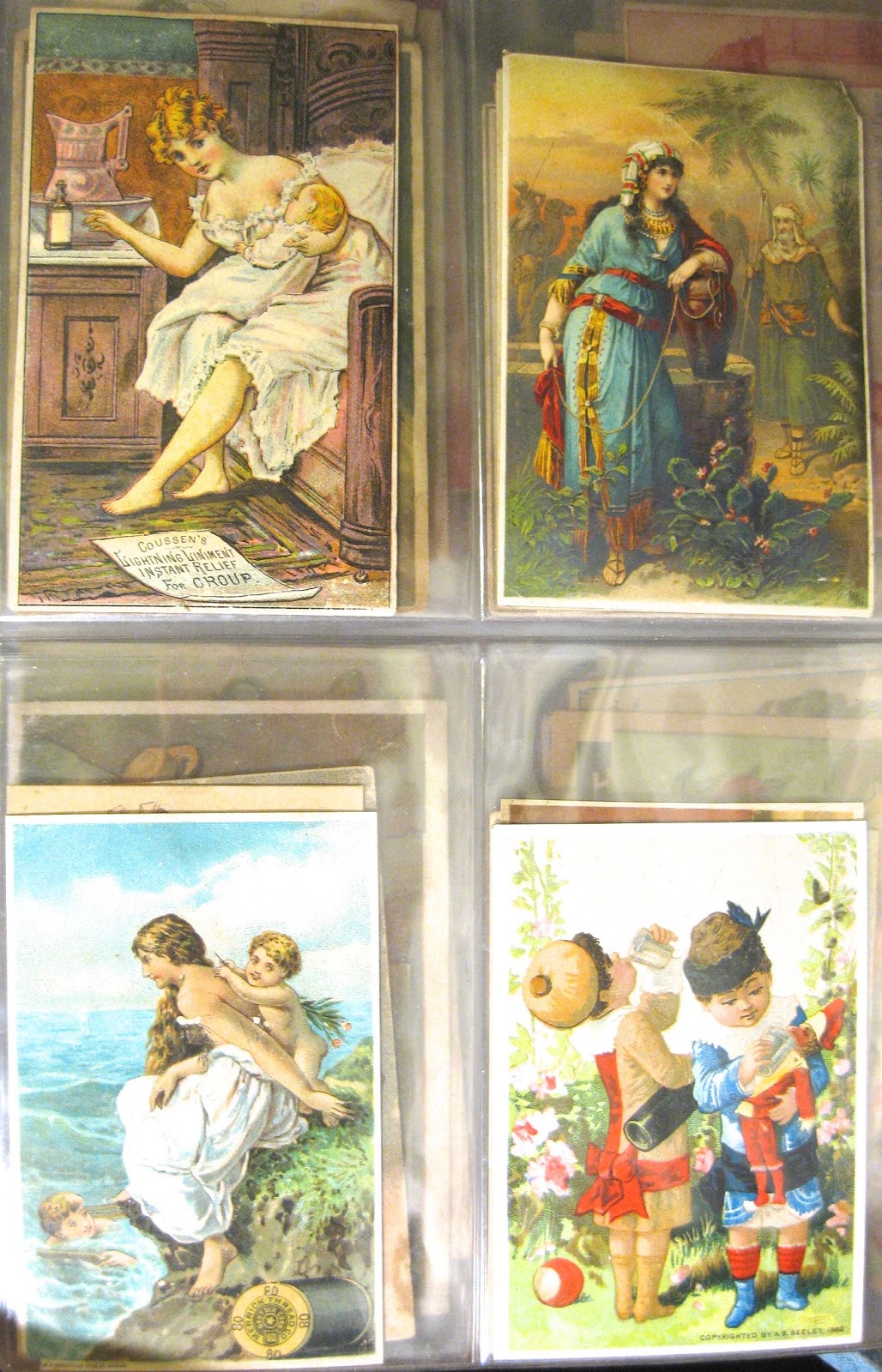
When I speak of “treasure” I’m referring to anything that can be converted to cash. By that definition, real estate is treasure. So are automobiles. Rare paintings. Oil wells. You get the drift. Within the context of my treasure-hunting experience, however, the perception of treasure will be primarily assigned to money, antiques and collectibles. This definition hardly limits the number of things that can be classified as treasure. The list includes: Coins. Currency, especially collectible notes. Bullion. Stamps. Jewelry. Antique furniture. Guns. Gems. Rare documents. Clocks and watches. Knives. Autographs. Rare bottles. Railroad artifacts and documents. Audio records. Diaries. Tools. Stained glass. Old appliances. Clothing. Radios. Military artifacts. Photographs. Art glass and china. Carnival glass. Cookie jars. Dolls. Indian artifacts. Marbles. Baseballs and baseball cards. Decoys. Postcards. Books. Silverware. Paintings. Art work. Antique automobiles. Rugs. Tokens. Posters. Musical instruments. Insulators. Flags. Comic books. Fishing lures. Pens and pencils. And on and on and on.
I’ve been fortunate in that I’ve amassed a large collection of the “treasures” that I love over my forty years of searching. Perhaps after reading of my many experiences (if you’re so inclined), you’ll want to begin your own treasure-hunting expedition.
Friday, August 31, 2007
II. First experiences with a metal detector
Back in 1967 in Vicksburg, where I was a young Engineer working the startup of Mississippi’s largest power plant, I “caught the disease.” Working twelve-hour days or nights didn’t leave much time for leisure activities for any of us, but, somehow our plant Maintenance Supervisor found time, mainly when he could grab a few minutes during the weekends, to search the hills of Vicksburg with his Metrotech metal detector. Every Monday morning he would share his coffee break with us Engineers, and always would he have a button, or a cannon ball, or some other relic of the War to garnish his tales of the latest hunt. My interest was aroused, of course, but the man was far too smart to share too much, especially his digging spots. I bugged him long and often without success. He knew that once a digger’s spot becomes known, it will be swarmed by other diggers like hornets to a nest.
I had a wife and two children, all three in school, so I had little left each paycheck to waste on such foolishness as metal detectors. I investigated the various machines on the market and
found my budget far too slim to afford a Metrotech or similar “really good” detector. I was something of a tinker, though, and when I discovered that a Heathkit detector kit could be purchased for $60.00 or so, I had found my means of entry into the world of treasure hunting. With screwdriver and soldering iron I assembled the Heathkit and tested its effectiveness in my backyard.
The next sunny weekend afternoon, my son Mike in tow, the two of us ventured forth with Heathkit and shovel in our 1965 VW to a spot I’d noticed along old Confederate Avenue where the grass was mowed and where our Confederate patriots just had to have entrenched themselves. I knew such was true, because cannons and monuments indicating just that were everywhere. Together Mike and I plodded almost solemnly to where the monuments indicated our boys had fought, a gently sloping hill near one of the cannons. I unlimbered the detector, put the head to the ground, and soon got a signal. “Mike!” I shouted after a shovelful of earth, “A Minie ball, I think!” Mike was as overjoyed as I, and together we intently scanned the earth. In a
moment we had another Minie ball. “Mike, this is gonna be easy!” I told my son, “Just wait ‘til Monday, when I show that Maintenance Supervisor what we’ve found!”
I’d noticed an old black man and his wife seated on the front porch of their house immediately adjacent to our hunting field, but I’d paid them no mind, even though they seemed quite interested in our activities. The old man sat pulling on his pipe, blowing clouds of smoke into the air, while his wife watched us. As I dug for my third Minie ball, I heard the old man calling to me, “Hey, you! You and that boy!”
I was far too busy digging War relics to bother with him.
“Hey, you! What do you think you’re doing?”
The old guy was obviously jealous of my skill with the detector, so I looked up, gave him a toothy grin, and went back to digging.
“You fool!”
Now, this was too much. What in the world was wrong with the old guy?
“What?” I shouted at him, turning. “I'm busy. Whaddaya want?”
“You darn fool,” he shouted in return as he stabbed the back end of his pipe in our direction. “Don’t you know you’re digging in the Military Park?”
I had heard that digging in the Vicksburg National Military Park was against the rules.
“They’ll put you in jail!” he shouted. “They’ll fine you a thousand dollars!”
“Jail,” I whispered softly to Mike. “I think I heard about that.” I looked at my son. “You and me, Mike. Sharing a cell. And a thousand dollar fine…”
I gently raked dirt over my latest hole and paused to reflect as I scanned the horizon to make sure no Park Rangers were about. I said to Mike, “Son, maybe we better find another spot to dig.” Mike already had hold of my hand, tugging me away. “Yeah, Daddy,” he said earnestly, “Let’s go.”
Mike and I pretended we had planned to leave all along as we slunk back in the direction of our VW. We waved a gay bye-bye to the old man and his wife and drove on home with our two Minie balls.
The Heathkit detector, I soon found, while pitifully insufficient at ignoring small bits of iron, like nails, had an advantage over the more-discriminating Metrotech in that its depth capability was superior. I found that by very carefully tuning the two pots located on the head (I soldered small copper wire “knobs” onto them) I could achieve good “ground balance” and substantially improve the detector’s ability to locate deeply buried objects. With practice I learned to differentiate (somewhat) between the sound of small nails and the other “good” signals. Mike and I were ready for another expedition.
On a Saturday morning we climbed once again into our VW and headed for a hillside owned by my employer (I had done some research!) near the lines held by the Confederates during the siege. Mike played in the leaves that covered the hillsides while I hunted. With every Minie ball I dug my excitement grew. I felt sure this area had been hunted by other diggers, but they had apparently missed quite a few relics. Or was the Heathkit that much better than the other machines?
Soon I heard a huge blast from the Heathkit that could be no Minie ball – unless there were a hundred of them in one spot. Carefully I dug down a foot or more. When the shovel struck solid iron, I called Mike over. Together we finished uncovering a projectile – pointed on one end where a brass fuse protruded, strangely spiraled towards its hollow bottom. “It’s a cannon ball, Mike,” I said proudly. “Our first cannon ball!”
“But, Dad.” Mike looked puzzled. “Cannon balls are round.”
He was right. Wasn’t he? “Not a cannon ball, then, Mike. Something fired from a cannon, though.”
So excited were we that we toted our “cannon ball” and Minie balls to the VW and headed for home to try and learn more about our find. Mike sat in the front seat beside me, the projectile in his lap. As we wound our way through the curves of Confederate Avenue he turned to me and said, “Dad, do you think this thing could still blow up?”
I hadn’t really considered that possibility, but I thought about it and answered as truthfully as I knew how, “I guess it could, Mike. But I’m sure it’ll be okay until we get home.”
Mike very gently laid the shell beside him on the front seat, climbed into the VW’s back seat, and rode there
the remainder of the way home. I was amused, but I was soon warned that projectiles from the war CAN explode.
I learned that the “cannon ball” was a 3.8” James Rifle shell, Type I, with a James percussion fuse (the Supervisor nearly had a stroke when I showed it to him and casually asked what it was). Eventually I drilled and washed the black powder from it. It’s now in my son’s collection, and one of his most treasured artifacts.
Not a week later, back on the relic trail, I dug a strange button, one whose obverse consisted of a bird apparently feeding its young, and upon whose reverse were inscribed the words “Extra Rich.” I had no idea what it could be, so next morning, certain that the Supervisor could identify the thing, I nonchalantly flipped it onto his desk before him and asked if he’d ever seen anything like it. Talk about stroke time! The poor guy nearly fell from his chair as he exclaimed, “Good God! A Louisiana Infantry button! Where’d you find it?”
I can’t begin to describe the joy I felt at his words. This relic-hunting business was like a competition, and the
more the opposition squirmed, the more fun it was! Between the button and the James shell, my friend the Supervisor had become somewhat anguished. Soon, he had ordered and assembled his very own Heathkit metal detector.
I was on fire now. The “treasure bug” had bitten me, and I had contracted the disease. The late sixties to early seventies was a perfect time to dig relics in Vicksburg, for construction of the new Interstate Highway 20 was underway, housing projects were springing up all around the siege lines – clearing the ground for easy hunting – and people were generally quite willing to permit digging on their property. With each day bringing exposure of new stretches of what had been a part of Confederate and Union lines during the siege, I soon had a growing collection of relics of the War, including many artillery shells. In fact, the search for artillery shells became the primary objective of my hunts. Over the course of the next four years I dug ten, twenty, and thirty-pounder Parrott shells, flat-top and chill-nose Parrott bolts, James shells and bolts, types I & II, Hotchkiss shells and bolts from 3 to 4.2 inches diameter, spherical shells and shot in calibers 6-pounder, 12-pounder, 24 pounder, 32 pounder, 42 pounder, and 8, 9, 10, and 11 inch diameter, 3 inch, 3.67 inch, and 4.2 inch Schenkl shells, 3 inch and 4.2 inch Mullane shells and bolts, 3 inch Reads in bolt and shell, 6.4” tear-drop Read bolts, and Archer bolts, besides several tons of fragments that occupied a growing portion of my backyard. I also began a collection of the various types of Minie balls, specializing more in the rare Confederate bullets than in the more common Union types.
In 1971 I was transferred to Jackson, Mississippi, and in 1974 to Greenville, Mississippi, to start up the new Gerald Andrus power plant; duties and distance drastically curtailed the amount of time I was able to devote to hunting relics in Vicksburg. Perhaps I benefited from the relocation, however, as I learned that treasure exists in many different forms. I became a coin-shooter, a bottle-digger, and a flea-market fanatic. I developed a love for rare books, particularly of Southern origin and content, and became more appreciative of antique furniture and the art nouveau. I never lost my love of relic-hunting the Vicksburg area, though, and when I returned there in 1978, my love affair was renewed.
I had a wife and two children, all three in school, so I had little left each paycheck to waste on such foolishness as metal detectors. I investigated the various machines on the market and
The next sunny weekend afternoon, my son Mike in tow, the two of us ventured forth with Heathkit and shovel in our 1965 VW to a spot I’d noticed along old Confederate Avenue where the grass was mowed and where our Confederate patriots just had to have entrenched themselves. I knew such was true, because cannons and monuments indicating just that were everywhere. Together Mike and I plodded almost solemnly to where the monuments indicated our boys had fought, a gently sloping hill near one of the cannons. I unlimbered the detector, put the head to the ground, and soon got a signal. “Mike!” I shouted after a shovelful of earth, “A Minie ball, I think!” Mike was as overjoyed as I, and together we intently scanned the earth. In a
moment we had another Minie ball. “Mike, this is gonna be easy!” I told my son, “Just wait ‘til Monday, when I show that Maintenance Supervisor what we’ve found!”I’d noticed an old black man and his wife seated on the front porch of their house immediately adjacent to our hunting field, but I’d paid them no mind, even though they seemed quite interested in our activities. The old man sat pulling on his pipe, blowing clouds of smoke into the air, while his wife watched us. As I dug for my third Minie ball, I heard the old man calling to me, “Hey, you! You and that boy!”
I was far too busy digging War relics to bother with him.
“Hey, you! What do you think you’re doing?”
The old guy was obviously jealous of my skill with the detector, so I looked up, gave him a toothy grin, and went back to digging.
“You fool!”
Now, this was too much. What in the world was wrong with the old guy?
“What?” I shouted at him, turning. “I'm busy. Whaddaya want?”
“You darn fool,” he shouted in return as he stabbed the back end of his pipe in our direction. “Don’t you know you’re digging in the Military Park?”
I had heard that digging in the Vicksburg National Military Park was against the rules.
“They’ll put you in jail!” he shouted. “They’ll fine you a thousand dollars!”
“Jail,” I whispered softly to Mike. “I think I heard about that.” I looked at my son. “You and me, Mike. Sharing a cell. And a thousand dollar fine…”
I gently raked dirt over my latest hole and paused to reflect as I scanned the horizon to make sure no Park Rangers were about. I said to Mike, “Son, maybe we better find another spot to dig.” Mike already had hold of my hand, tugging me away. “Yeah, Daddy,” he said earnestly, “Let’s go.”
Mike and I pretended we had planned to leave all along as we slunk back in the direction of our VW. We waved a gay bye-bye to the old man and his wife and drove on home with our two Minie balls.
The Heathkit detector, I soon found, while pitifully insufficient at ignoring small bits of iron, like nails, had an advantage over the more-discriminating Metrotech in that its depth capability was superior. I found that by very carefully tuning the two pots located on the head (I soldered small copper wire “knobs” onto them) I could achieve good “ground balance” and substantially improve the detector’s ability to locate deeply buried objects. With practice I learned to differentiate (somewhat) between the sound of small nails and the other “good” signals. Mike and I were ready for another expedition.
On a Saturday morning we climbed once again into our VW and headed for a hillside owned by my employer (I had done some research!) near the lines held by the Confederates during the siege. Mike played in the leaves that covered the hillsides while I hunted. With every Minie ball I dug my excitement grew. I felt sure this area had been hunted by other diggers, but they had apparently missed quite a few relics. Or was the Heathkit that much better than the other machines?
Soon I heard a huge blast from the Heathkit that could be no Minie ball – unless there were a hundred of them in one spot. Carefully I dug down a foot or more. When the shovel struck solid iron, I called Mike over. Together we finished uncovering a projectile – pointed on one end where a brass fuse protruded, strangely spiraled towards its hollow bottom. “It’s a cannon ball, Mike,” I said proudly. “Our first cannon ball!”
“But, Dad.” Mike looked puzzled. “Cannon balls are round.”
He was right. Wasn’t he? “Not a cannon ball, then, Mike. Something fired from a cannon, though.”
So excited were we that we toted our “cannon ball” and Minie balls to the VW and headed for home to try and learn more about our find. Mike sat in the front seat beside me, the projectile in his lap. As we wound our way through the curves of Confederate Avenue he turned to me and said, “Dad, do you think this thing could still blow up?”
I hadn’t really considered that possibility, but I thought about it and answered as truthfully as I knew how, “I guess it could, Mike. But I’m sure it’ll be okay until we get home.”
Mike very gently laid the shell beside him on the front seat, climbed into the VW’s back seat, and rode there
I learned that the “cannon ball” was a 3.8” James Rifle shell, Type I, with a James percussion fuse (the Supervisor nearly had a stroke when I showed it to him and casually asked what it was). Eventually I drilled and washed the black powder from it. It’s now in my son’s collection, and one of his most treasured artifacts.
Not a week later, back on the relic trail, I dug a strange button, one whose obverse consisted of a bird apparently feeding its young, and upon whose reverse were inscribed the words “Extra Rich.” I had no idea what it could be, so next morning, certain that the Supervisor could identify the thing, I nonchalantly flipped it onto his desk before him and asked if he’d ever seen anything like it. Talk about stroke time! The poor guy nearly fell from his chair as he exclaimed, “Good God! A Louisiana Infantry button! Where’d you find it?”
I can’t begin to describe the joy I felt at his words. This relic-hunting business was like a competition, and the
I was on fire now. The “treasure bug” had bitten me, and I had contracted the disease. The late sixties to early seventies was a perfect time to dig relics in Vicksburg, for construction of the new Interstate Highway 20 was underway, housing projects were springing up all around the siege lines – clearing the ground for easy hunting – and people were generally quite willing to permit digging on their property. With each day bringing exposure of new stretches of what had been a part of Confederate and Union lines during the siege, I soon had a growing collection of relics of the War, including many artillery shells. In fact, the search for artillery shells became the primary objective of my hunts. Over the course of the next four years I dug ten, twenty, and thirty-pounder Parrott shells, flat-top and chill-nose Parrott bolts, James shells and bolts, types I & II, Hotchkiss shells and bolts from 3 to 4.2 inches diameter, spherical shells and shot in calibers 6-pounder, 12-pounder, 24 pounder, 32 pounder, 42 pounder, and 8, 9, 10, and 11 inch diameter, 3 inch, 3.67 inch, and 4.2 inch Schenkl shells, 3 inch and 4.2 inch Mullane shells and bolts, 3 inch Reads in bolt and shell, 6.4” tear-drop Read bolts, and Archer bolts, besides several tons of fragments that occupied a growing portion of my backyard. I also began a collection of the various types of Minie balls, specializing more in the rare Confederate bullets than in the more common Union types.
In 1971 I was transferred to Jackson, Mississippi, and in 1974 to Greenville, Mississippi, to start up the new Gerald Andrus power plant; duties and distance drastically curtailed the amount of time I was able to devote to hunting relics in Vicksburg. Perhaps I benefited from the relocation, however, as I learned that treasure exists in many different forms. I became a coin-shooter, a bottle-digger, and a flea-market fanatic. I developed a love for rare books, particularly of Southern origin and content, and became more appreciative of antique furniture and the art nouveau. I never lost my love of relic-hunting the Vicksburg area, though, and when I returned there in 1978, my love affair was renewed.
Subscribe to:
Posts (Atom)